

How To Repair A Broken Temporary Crown
Dentaly.org is reader-supported. When y'all buy via the links on our site, we may earn an affiliate commission at no cost to yous. Acquire more.
It is like shooting fish in a barrel to presume that you are never going to encounter a real dental emergency that requires dental mucilage. Subsequently all, y'all are doing everything that yous can to accept good care of your teeth: cleaning them twice a day, being careful of what you bite into, flossing regularly and visiting a dentist every now so.
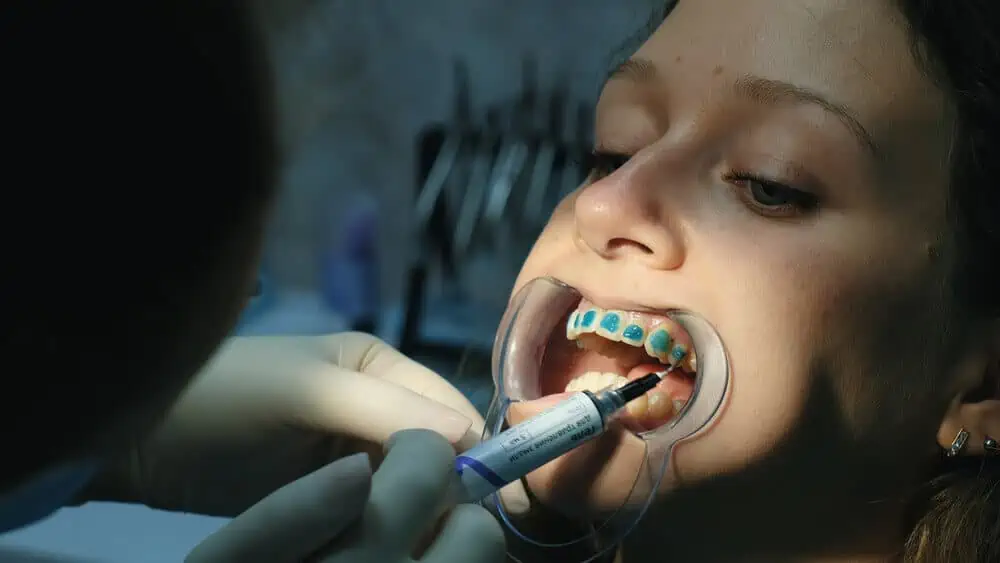
Nevertheless, you might observe yourself in a situation where y'all take a cleaved tooth or loose crown or filling and require dental restoration. It may be tempting to use regular household glue to try and make the dental repair yourself, just this is definitely not something you should do!
There is actually a special kind of dental glue for teeth, which also goes by the proper name of dental cement or dental adhesive, used by dentists to help restore broken teeth and forestall farther damage.
So what is dental glue? What is it made of and how does information technology help with temporary and permanent tooth repair? Keep reading to detect out!
If you lot are looking for ways to repair a tooth yourself, our guide to temporary filling kits volition help.
Table of contents
- ane What is dental glue?
- 2 How does dental cement piece of work?
- 3 Permanent vs temporary dental cement
- iii.ane Temporary dental glue
- iii.two Permanent dental glue
- iv Types of dental glue: composition
- four.ane Drinking glass ionomer cement
- 4.ii Bioceramic cement
- 4.3 Zinc oxide eugenol cement
- iv.4 Zinc phosphate cement
- iv.v Agglutinative resin cement
- iv.6 Aesthetic resin cement
- five How do dentists cull dental glue?
- 5.1 Longevity
- 5.2 Durability
- five.three Aesthetics
- 6 Application techniques
- 7 Tin can you use superglue on teeth?
- viii Conclusion
- 9 FAQs
- 9.ane What glue tin can you use on teeth?
- 9.2 How can you lot treat a dental crown placed with temporary dental glue?
- 9.3 How long after a crown is cemented can I eat?
- 9.4 What do I do if a temporary crown falls off?
What is dental mucilage?
Dental cement, molar mucilage, or any you choose to call it, is an agent that a dentist uses for securing a tooth restoration, such as a fixed bridge, inlay, onlay, or crown, to your damaged teeth. Tooth cement tin can also be used to build upward the tooth itself, for example to repair a small chip, and information technology'due south the same stuff that's used in some types of fillings.
In that location are various types of dental cement used in the U.k. – both temporary and permanent – and each textile has its ain properties which make it suitable unlike purposes. We'll discuss these in more than item later.
All types of dental adhesive accept one purpose in common: to ensure that your carefully crafted dental restorations or appliances stay exactly where they should be; in your mouth. Plus, in the example of temporary dental cement, it should be piece of cake for the dentist to remove it once again when needed.
Allow's take a cursory look at how molar glue actually works.
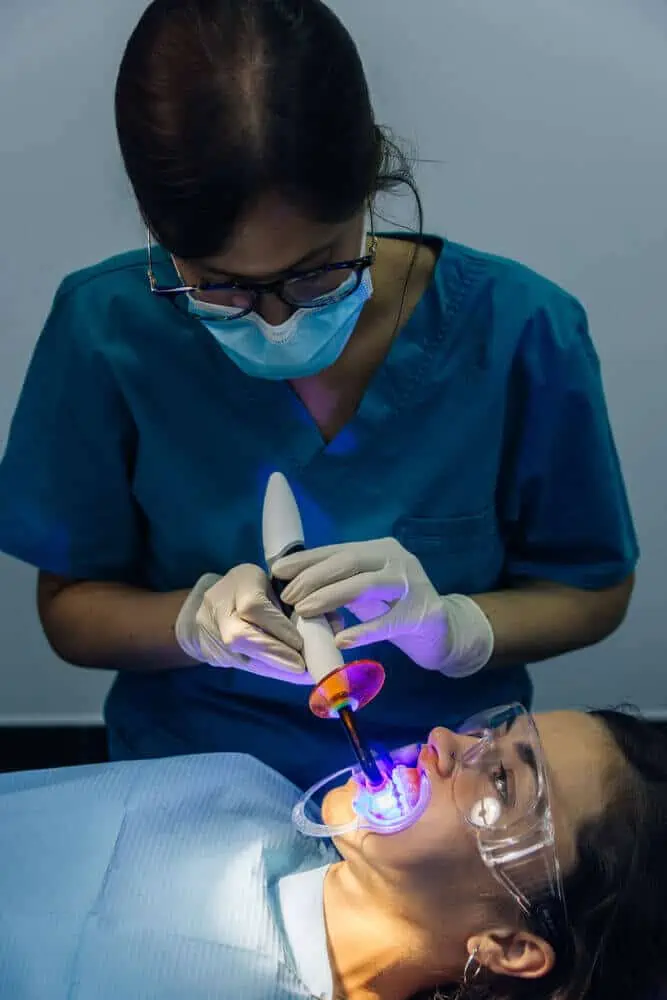
How does dental cement work?
Dental glue uses memory and resistance upon compression to work equally an adhesive. In some types of tooth cements, a formation of chemic bonds too occurs.
For instance, the force exerted by the compressed dental glue lying just below the crown of the tooth is what holds and bonds it together. The chemical bond formed between the mucilage and the crown provides actress strength and it is less likely to intermission downwards compared to glue that does not course bonds.
However, considering chemically-bonded dental cement is a higher strength, information technology is harder to remove for repairs or replacement restorations.
Stronger dental cement for crowns is a great option for those who continually grind their teeth as it can provide additional stability and longevity to the crowns.
Permanent vs temporary dental cement
Dental agglutinative is classed according to its application:
| Fine grains used for luting and cementation | |
| Medium grain used for orthodontic purposes | |
| Used for restorative purposes | |
| Used for liners or base applications |
Dental glue for teeth bridges, crowns and other restorations can exist farther classified according to its durability and composition.
When it comes to immovability, dental cements are simply classed equally 'temporary' or 'permanent'.
Temporary dental glue
Temporary glue is commonly used to fix crowns and other restorations for a brusk period of time. A dentist uses temporary crown cement to concord temporary crowns in place, or when they wish to observe and assess how your teeth respond to a particular restoration.
Temporary tooth adhesive is usually made upwardly of eugenol and zinc oxide powder. It has the following properties:
- Provides a good grip on teeth as well as on the crown or other restoration
- Is easily tolerated past the surrounding tissue
- Is piece of cake to remove
- Protects a damaged molar and helps minimise sensitivity
- Saliva helps it dissolve in a short catamenia of time. Because of this, temporary glue must be replaced with permanent glue in three to half-dozen weeks following its awarding.
Permanent dental glue
Permanent dental glue is the type of teeth mucilage used for fixing various dental restorations on a permanent basis. It's fabricated by mixing liquid and powder together to form a paste that has the following backdrop when it sets:
- Creates a strong bond with the molar and the restoration to provide long-term, permanent protection
- Is easily tolerated by the surrounding tissue, thereby preventing dead teeth and tissue.
- Provides good sealing at the margins to prevent leakage
- Protects the dental tissue from all sorts of external stimuli
- Provides exceptional resistance
- Does non dissolve in saliva or whatsoever other oral liquid; thereby offering permanent protection.
Types of dental gum: limerick
Depending on what it's fabricated of, dental cement can be divided into half-dozen types:

Drinking glass ionomer cement
Glass ionomer cement is made from powdered glass mixed with an acid. Information technology is used for the final cementation of bridges and crowns made from alloys, but it doesn't adhere to porcelain. This blazon of dental cement is often the material of option for filling children'due south milk teeth.
Bioceramic cement
Bioceramic dental cement is a permanent adhesive agent that appears opaque on x-rays. It'due south commonly used for endodontic (root canal) piece of work because it is biocompatible, meaning information technology tin can either part as natural tissue or encourage the regeneration of tissue.
Zinc oxide eugenol cement
Zinc oxide cement is an oil-based glue used to soothe the pulp of a cleaved molar. Information technology is ordinarily avoided in cases where permanency is required. This cement is particularly helpful to temporarily cement a tooth with exposed dentine. Nowadays, many companies add together different splinting agents to the zinc oxide cement to grant it permanent luting effects.
Zinc oxide eugenol is not considered to be a strong product for cementing nigh types of dental restorations, and its use is normally limited to gluing stainless steel crowns, acrylic crowns, and cast restorations.
Zinc phosphate cement
Zinc phosphate cement was i of the first permanent cements to be used in dentistry, and information technology remains in wide use today for a variety of permanent restoration purposes. Although information technology doesn't chemically bond to the tooth surface, information technology has exhibited significant long-term success. Nevertheless, it is gradually becoming less pop because its relatively high acidity can irritate tooth pulp.
Adhesive resin cement
Agglutinative resin cement is a permanent dental glue that bonds with nearly ceramic and alloy restorations, except implant-supported crowns, veneers, indirect resin restorations and bridges.
Artful resin cement
Aesthetic resin cement contains translucent resins that are available in different shades, meaning information technology can be made to match the natural tooth color. It is normally used for bonding all-ceramic and indirect composite restorations, including chipped tooth repair. This type of mucilage has loftier resistance and utility and a unique composition that does not pause autonomously or dissolve.
How do dentists choose dental glue?
Normally, dentists decide on the kind of dental cement they apply depending on the following three factors:
Longevity
Longevity is one of the main factors that the dentist will consider when choosing the all-time glue for y'all. They will employ a temporary or a permanent glue depending on how long the restoration needs to last.
Durability
Durability really matters when it comes to choosing the right kind of teeth mucilage, and it basically depends on the type of restoration used. Permanent dental glue provides adept durability and is used for keeping long-term crowns and bridges in place. The material that the restoration is fabricated from may also determine the forcefulness and durability needed from the cement.
Aesthetics
Dentists may cull which dental cement to utilise depending on the artful preferences of their clients. For example, if color is important, a dentist may choose a resin adhesive. Although, this type of mucilage is difficult to remove and may get discoloured hands. It is important to keep these factors in mind when deciding on the correct type of dental mucilage.

Application techniques
There are a number of steps that dentists usually follow in society to employ dental cement. In this scenario, we will discuss its awarding in reference to a tooth crown.
- The mouth is properly cleaned followed by cleaning and disinfection of the crowns. The dentist commonly puts a rubber dam or cotton rolls in the oral cavity to get rid of any fluid.
- The cement is prepared co-ordinate to the instructions until the desired consistency is achieved.
- The dental crown mucilage is then practical to the interior of the crown in such a style that it covers information technology completely.
- The dentist and so places the crown on the abutment of the tooth in guild to prevent any misplacement.
- Subsequently the restoration process is completed, all extra glue is cleared abroad.
After the process, the dentist will advise the patient when it is prophylactic to swallow and how to treat their new crown properly.
Tin yous use superglue on teeth?
'Superglue' is the commercial proper name for cyanoacrylate adhesives meant for household and medical purposes. This type of adhesive is non meant for internal use, so don't use super glue as dental glue. Some people may even accept an asthmatic or peel reaction as soon equally they come up in contact with this adhesive.
Superglue may too have a serious reaction with unlike types of natural fibres, for case, cotton, which is unremarkably used in dental procedures. These reactions exacerbate the release of toxic fumes and may fifty-fifty lead to combustion.
Furthermore, superglue can form instant bonds with your skin. You could easily end up with your restoration glued to your ain finger, or your finger to your tooth, lips, natural language, or cheeks while trying to fix your broken tooth!
If y'all need to set a broken molar or crown in an emergency, y'all can purchase a temporary filling kit that is designed for this purpose. But, you should all the same visit a dentist as soon as possible to have the trouble treated correctly.
Similarly, yous shouldn't use superglue to repair dentures or to try to proceed them in your oral cavity. There are many effective denture fixatives to cull from, which are designed for this purpose.
Decision
Dental gum is an amazing creation designed to hold your damaged molar together, apply restorations, and prolong the life of your molar. It tin can provide both short-term and long-term benefits, but must simply be used under the supervision of your dentist.
After whatsoever process involving dental adhesive to repair your teeth, accept extra care regarding your oral health and visit your dentist in one case or twice a year at least, depending on the recommendation of your dentist, to brand certain that everything continues to exist in gild.
FAQs
What glue can yous apply on teeth?
Merely special dental adhesives should be applied to your teeth. Teeth are biological structures that don't respond well to non-biocompatible chemicals and products. For instance, if you attempt to apply superglue, it could end upwardly permanently damaging your tooth, eventually requiring a full tooth extraction.
How can you lot care for a dental crown placed with temporary dental mucilage?
When you get a temporary dental crown that is going to stay in your mouth for a couple of weeks, it is crucial to take care of it. This can exist achieved by post-obit the tips mentioned below:
- Avoid chewing on the side with the affected molar
- Avoid consuming hard-to-chew or sticky foods
- Maintain skillful oral hygiene
- Inform your dentist if whatever discomfort arises
How long afterwards a crown is cemented tin can I eat?
Yous should avoid eating annihilation for an hour later having your crown identify (or longer if your dentist advises). For the next day or two, avert hard or chewy foods. Endeavour not to seize with teeth on the crown too much while the cement fully hardens.
What exercise I do if a temporary crown falls off?
Sometimes, temporary crown cement fails and the crown falls off. You might not be able to visit a dentist immediately, so the all-time solution may be to utilise an over-the-counter emergency dental repair kit while you lot expect. This should hold the crown in place for a few days until you tin can get a dental date.
Recall that fixing your crown on your own is not a permanent solution and you will need to run across a dentist ASAP.
Sign upwards to receive the latest news and offers from Dentaly.org
Give thanks you,
for signing upwardly for Dentaly.org newsletter! You volition receive a confirmation e-mail.
Oops error,
Something has happened when you tried to send us your data. Please attempt later. Check the data you entered.

How To Repair A Broken Temporary Crown,
Source: https://www.dentaly.org/en/restorative-dentistry/dental-glue/
Posted by: joneslicused.blogspot.com
0 Response to "How To Repair A Broken Temporary Crown"
Post a Comment