

How To Repair Floors In A Mobile Home
If you've been in many mobile homes, you've probably felt areas of the floor that feel spongy, or soft. Yous might take even seen holes through the subfloor. We've seen plenty. Allow'south talk over the best ways to ready these before you install any new flooring above the subfloor.
I've walked many mobile homes every bit potential flips or investments. Commonly, every abode more than 10 years sometime has developed a soft spot or two in the floor. If these are not repaired properly, they will ofttimes visually testify upward in the flooring. Even worse is the feeling of sponginess equally you walk across them.
The Short Answer
The process of repairing a bad mobile home subfloor is not difficult, but information technology should be done with intendance to accomplish the desired result:
- Make up one's mind the expanse to be repaired
- Remove the damaged portion of the subfloor
- Adhere floor joist supports for subfloor replacement
- Replace subfloor with new textile
- Level new subfloor area
- Supercede flooring over the repaired subfloor
Let's look at each of these areas in a bit more than detail to get a proficient understanding of how to do information technology correct the first time.
Determine The Surface area To Exist Repaired
The subfloors of many older manufactured homes tend to exist made of dense particle board. Over the years, this type of subfloor has the tendency to break down in heavy traffic areas within the domicile.
Holes, of form, are obvious. What is less obvious is the breakdown of the subfloor that hasn't all the same caved through. When the subfloor is getting weak, it feels very spongy or soft when you walk on it. If you feel a sponginess, or a soft spot, take tiny baby steps all around the area to go a feeling for how unlevel and spongy the area is.
When repairing the flooring, you will want to remove the entire area that feels spongy, soft or unlevel.
I accept one mobile abode that I purchased every bit a rental about ii years ago. Information technology was in rough condition, simply had renters in place when purchased. When the renter left, I decided to remodel the home and sell information technology. At that place were a few holes and a number of soft spots throughout the entire mobile home. The rest of the home had several soft spots throughout.
This domicile was a 1980 model and had a subfloor made of particle board. Rather than repairing pocket-size spots all over the house, I decided to lay downwardly a new plywood subfloor throughout the home.
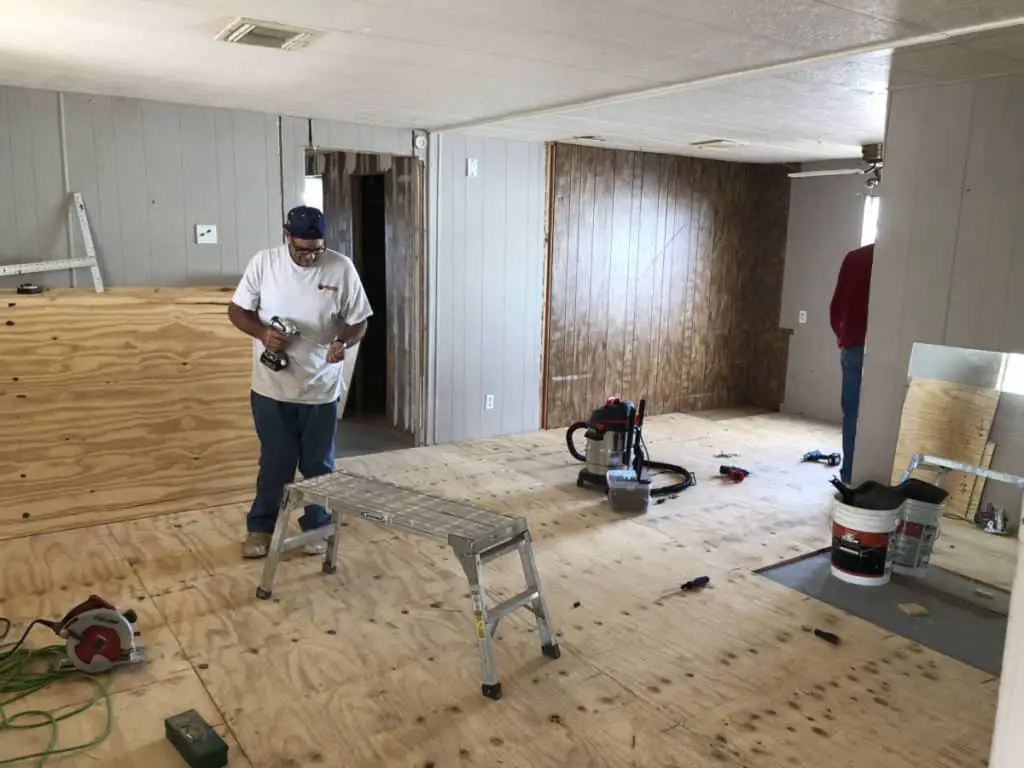
I knew that overall, the finished product would be far more level and feel more solid. The cost to do this throughout the 1,200 sf dwelling house was about $one,000 for materials and labor. When we finished, the floor felt very solid throughout.
Replacing the entire floor is non usually necessary. In some other recent home that nosotros did, at that place had been a leak in the laundry room and the subfloor was damaged in that room, as well equally into the hallway and bathroom.
Nosotros removed all of the damaged subfloor material in these areas.
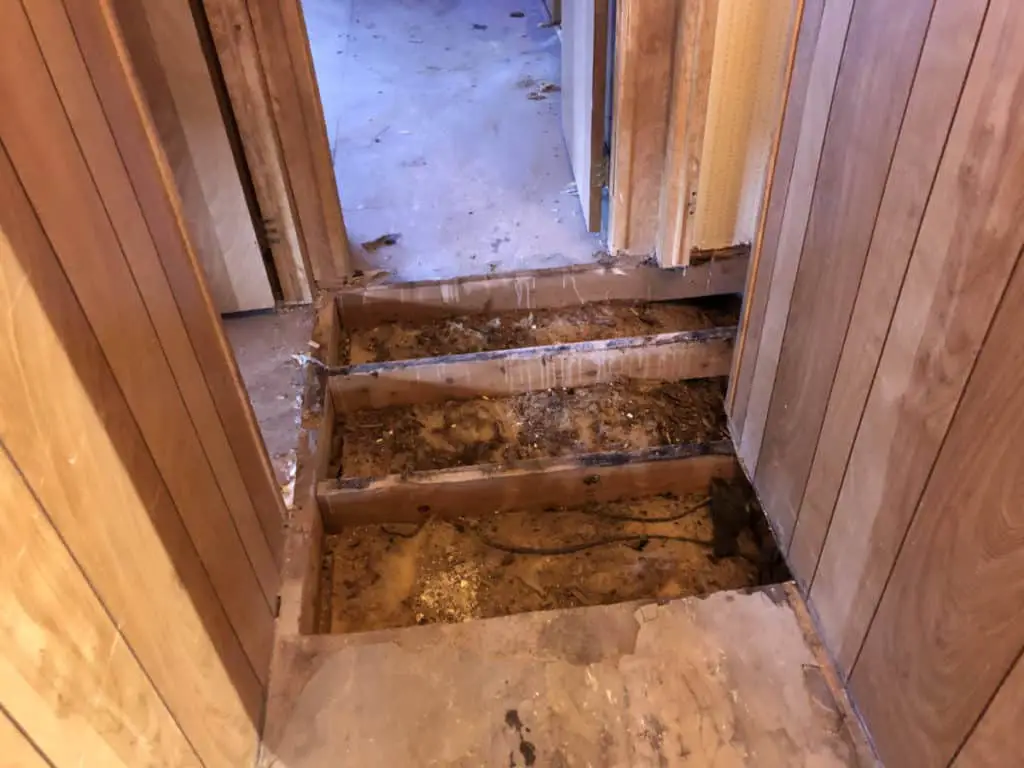
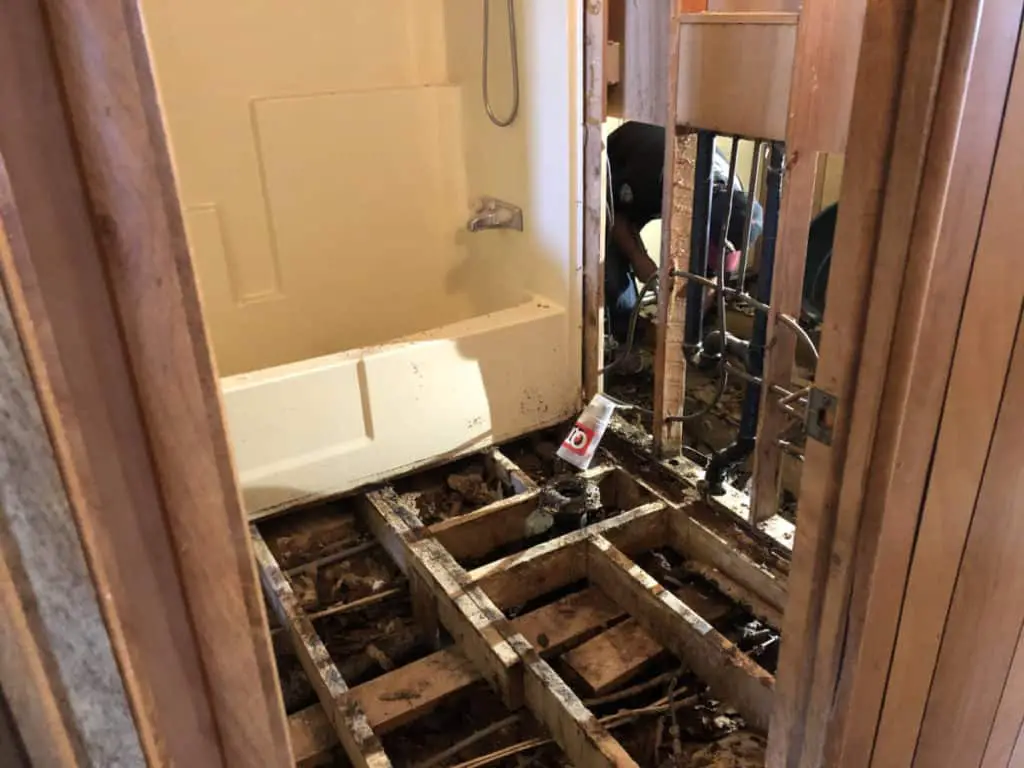
It is always better to err on the side of replacing more than floor than necessary.
Remove The Damaged Portion Of The Subfloor
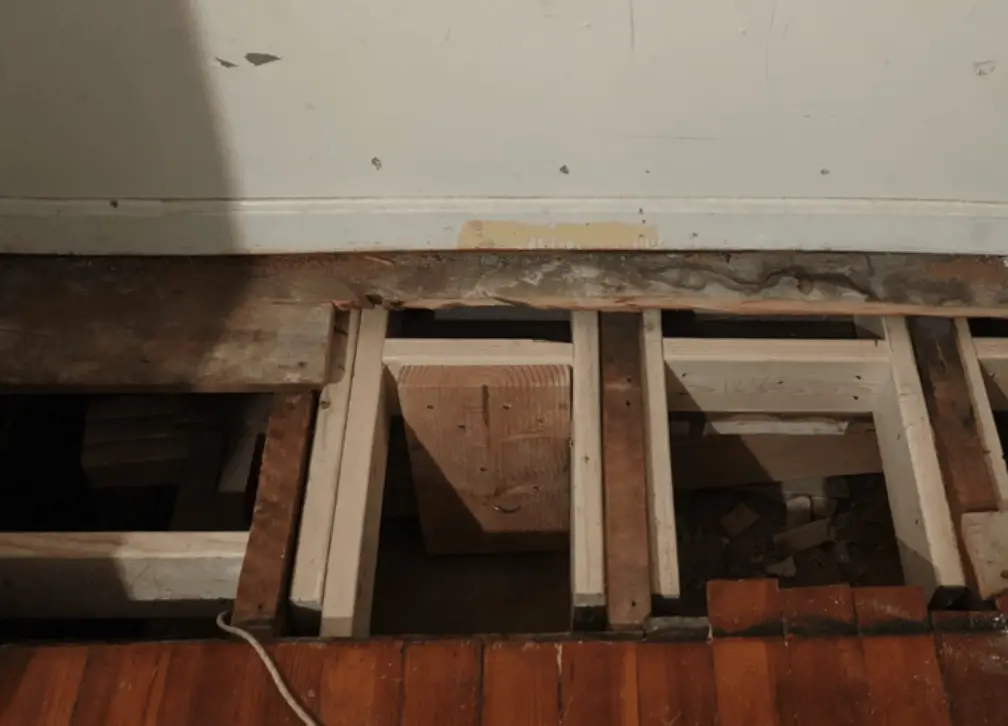
Equally y'all tin see in the above photos, there are floor joists below the floor. When removing the subfloor, you want to brand sure that y'all don't harm these joists.
The easiest style to begin removing the subfloor, is to use a big hole saw or a jigsaw and cutting out from the hole in the floor or a piece of the soft spot in the floor. One time you locate where the joist(s) are, then you can employ the saw to cut forth the side of the joist.
If you are removing a larger area that covers several joists, the you lot will desire to first cut out the bad areas between each joist, then remove the pocket-size slice left on meridian of the joist(s).
When removing subfloor, remove whatsoever part that feels compromised. It doesn't matter if at the end, the cut out portion isn't a perfect square or rectangle. We'll expect in the next section how to prepare the joists for supports to back up the new subfloor regardless of the shape.
Attach Floor Joist Supports For Subfloor Replacement
Before replacing the subfloor material, the joist support area underneath will need to exist modified. It is necessary that all edges of the new subfloor are supported underneath and can exist attached with screws.
In order to do this, building a box of sister supports inside of the flooring joists will be needed. The supports will also need to go underneath the remaining edges of the existing subfloor so that those edges can as well be screwed into the new supports.
Cross supports are needed between the flooring joists to support subfloor that has been cut. In that location are basically 2 ways to practise this:
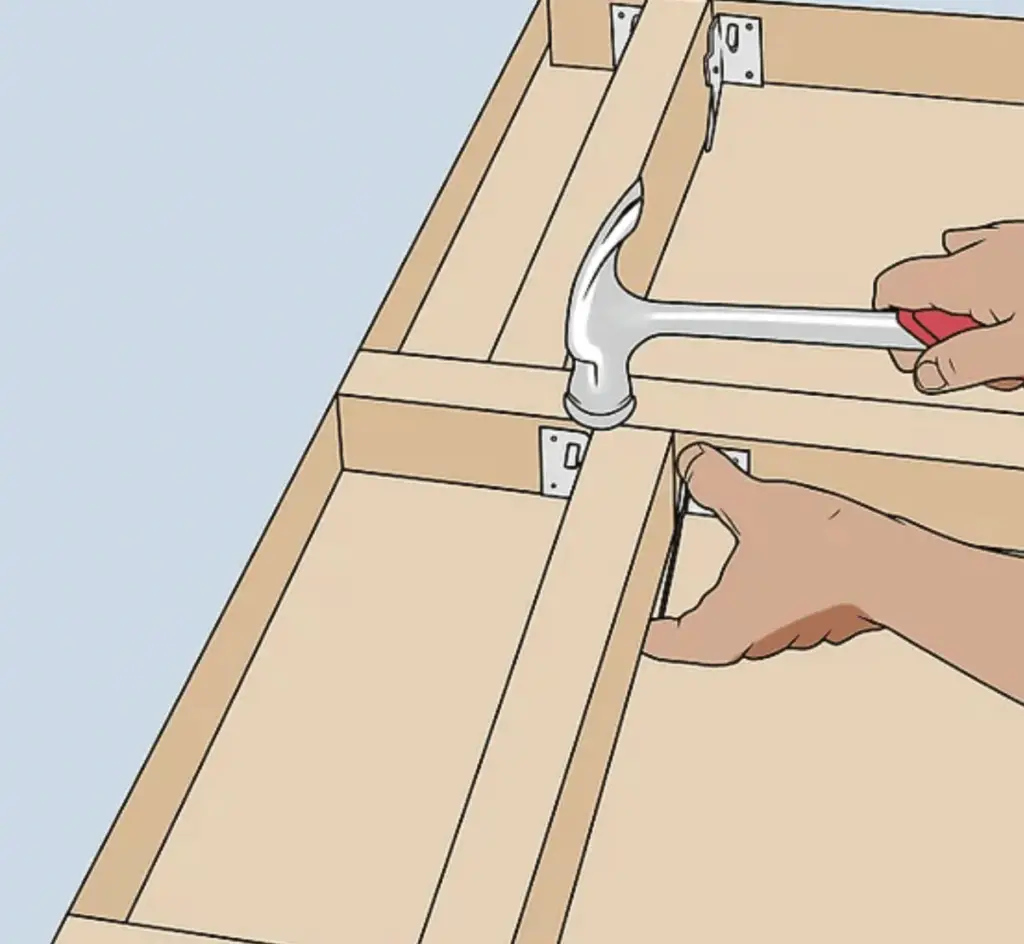
JOIST HANGERS
2 pictures above show edifice the cross joist support using traditional joist hangers. Get-go, the hanger is secured to the the floor joists. These are screwed into the existing floor joists. Then the cross support is cut to length, dropped into the joist hangers, and finally attached to the hangers using screws.
Where the installation of this type of support can be difficult, is that the cantankerous support must exist located so that 1/2 of the border is under the old subfloor and the other 1/two volition be nether the new subfloor to be installed. Getting the cross back up to drop down into the hangers can be tricky because of the existing subfloor that is still on the joist. I prefer to use the sistering joist method, every bit it is easier to install.
SISTER SUPPORT BOX
Using this method is generally easier to install the cantankerous support 1/ii under the existing subfloor. See the to a higher place motion picture.
Create an "H" from two 10 4 lumber. The sides of the H will each spiral into the existing floor joists. The cross of the "H" volition form the new cantankerous back up that will be located ane/2 under the existing subfloor and the other 1/2 will be exposed and then that the new subfloor border can be installed over the superlative. When it is done this way, the edges of both the erstwhile subfloor and the new subfloor can be secured properly to the new cantankerous support in the floor.
The "H" will be built before installing into the floor. The cross support of the "H" will exist deeply screwed into the sides of the "H" before installing the "H" into the flooring.
After building the "H", information technology is lowered into the floor. The sides of the "H" are then nailed and screwed into the floor joists. Recollect, the cross back up of the "H" must be 1/ii nether the edge of the existing subfloor so that the edge of the subfloor can be screwed into the new cantankerous support.
Supersede Missing Subfloor Section With New Cloth
Once whatever needed supports for the flooring joists are in place, it is time to supercede the actual subfloor. Although the subfloor for many manufactured homes is made from pressed lath, we like to use a quality plywood for the replacement textile.
The important matter about choosing the new fabric is to make absolutely sure that it is of the same thickness every bit the original subfloor. This volition brand the leveling process far easier.
When cutting the plywood for the replacement areas, make sure to take conscientious measurements and endeavor to get the fit as tight as possible.
- Step 1 – Spiral existing subfloor material to new supports.
- Secure all of the original existing subfloor to the new supports with glue and screws. (This volition prevent any squeaks at the seams.)
- Stride 2 – Advisedly measure the size to cut the new subfloor plywood.
- Stride 3 – Lay new plywood subfloor into place.
- Footstep 4 – Secure new subfloor into place with screws along each border and joist.
Level New Subfloor Surface area
The "level sensors" in your anxiety will selection up very easily on any uneven areas in your new flooring. If the new subfloor is not leveled before installing your new flooring cloth higher up it, you'll be able to feel humps and dips with your feet subsequently the flooring is installed.
To accept intendance of this trouble, nosotros have found that "Henry 555 Level Pro" works perfectly for our purposes:
"The Henry Level Pro 40 lb. Cocky-Leveling Underlayment is an easy-to-use, cement-based underlayment that self-levels. Just mix it with water, pour and spread. The underlayment is excellent for smoothing and flattening interior surfaces before installing floor coverings. Apply over concrete, wood, tile, terrazzo and cutting back adhesive."
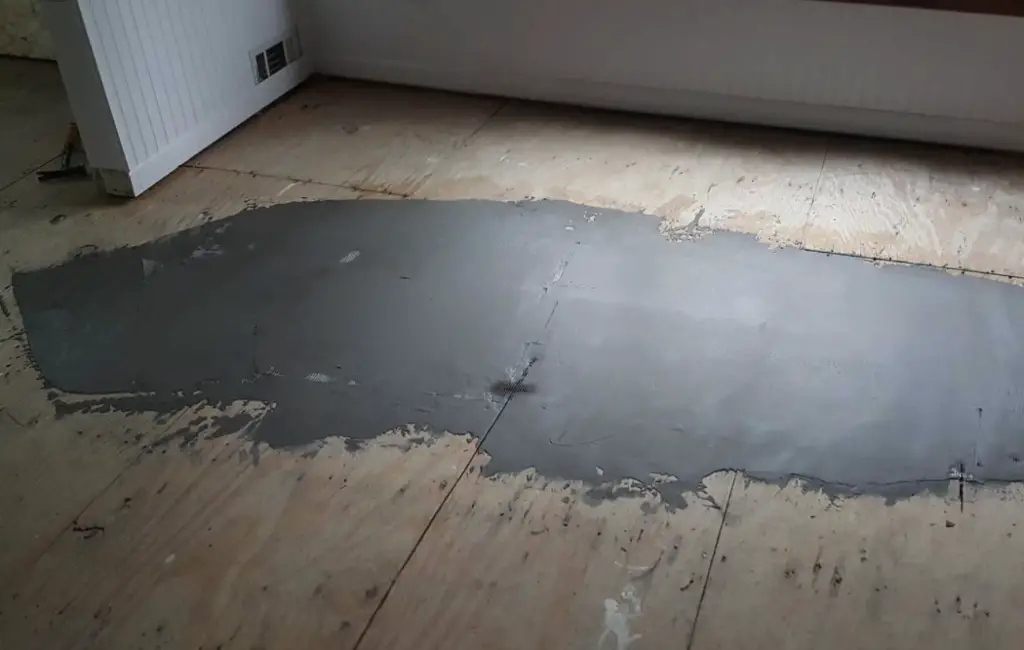
Taking the time for this step makes the finished product of your new subfloor area feel the mode information technology should underneath your feet.
Supervene upon Flooring Over The Repaired Subfloor
The final step is to replace the flooring over the repaired area. You may have just pulled up carpeting and repaired the floor underneath. If and then, and so relaying the carpet is an easy task.
Often, when repairing a bad subfloor, it is when you lot are going to install new flooring, whether tile, wood, or carpet.
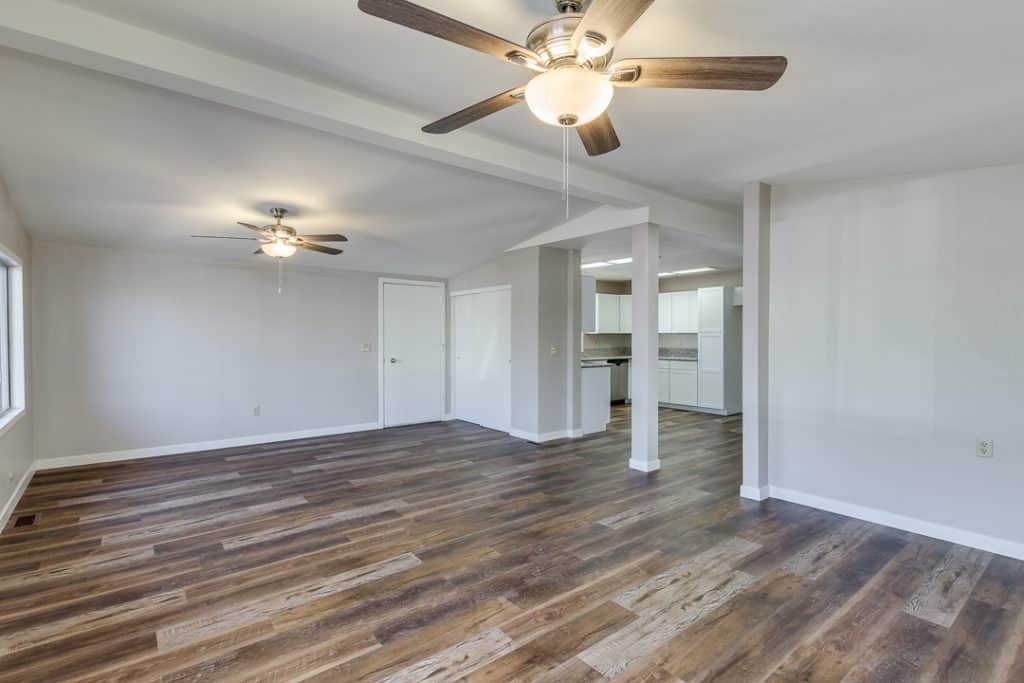
When a damaged subfloor is properly repaired, your new flooring should experience and expect beautiful for many years to come. Not having any depression spots or soft spots in your new floor makes your home feel solid and of better construction.
Related Questions
DO MOBILE HOME ROOF COATINGS REALLY WORK?
No matter where y'all live, it rains! Sometimes a lot, sometimes very lilliputian, but when it does rain, yous want your mobile home roof to be watertight. Also, summers tend to be hot, boiling and can generally oestrus upwards the roof to be hot enough to cook pancakes.Can popular roof coatings work to keep the water out and the heat off?
Roof coatings aresimilar a rubberized glue that gets "rolled on" the roof like pigment. It helps seal cracks to keep out h2o leaks, and it'south also generally white, which reflects the heat off of the roof. Information technology is one of the greatest and least expensive ways to extend the life of your roof; keeping your abode dry out and libation.
HOW Tin can I Get RID OF DAMPNESS AND MOLD IN MY MOBILE Habitation?
Recall the former saying "an ounce of prevention is worth a pound of cure"? That is absolutely the case when information technology comes to getting rid of dampness and mold inside of a mobile dwelling.
H2o and humidity in any dwelling house, site-built, modular, or manufactured can cause issues for any homeowner. In fact, water remediation (restoration) is a$210 BILLION dollar business concern in the The states. In example y'all're wondering, that is A LOT!
When water gets trapped in spaces such as attics, walls, crawl spaces, carpets, wood subfloors, etc.mold can develop. Mold is a common wellness hazard and causes all types of respiratory issues.
Most folks think that water damage inside of a habitation comes either from leaking plumbing or a leaky roof. While those are both true, that is only the beginning.Sealing out moisture, whether from the roof, windows, doors, floor, skirting or ground is necessary to prevent buildup of dampness and mold.Keeping the moisture abroad to begin with is the ultimate weapon against buildup of dampness and mold.
Source: https://mobilehomefriend.com/repairing-damaged-subfloor-in-a-mobile-home/
0 Response to "How To Repair Floors In A Mobile Home"
Post a Comment